Friday, 14 September 2018

25th Sunday in Ordinary Time

In the Gospel of Mark there are three prophecies of the Passion: Mk 8: 31; 9: 31 and 10: 33-34. Each time the disciples response is disturbing. Last week's gospel had Peter rebuking Jesus. This week we hear: "But they did not understand what he was saying and were afraid to ask him." (Mk 9: 32) In the Gospel for the 29th Sunday in Ordinary Time we will hear about James and John responding to the teaching by seeking the right to sit side by side with Jesus in his glory (Mk 10: 35-45). This builds on the argument among the disciples, from today, as to who was the greatest. We therefore have, successively: denial, fear, self-seeking ambition. The question posed by these accounts is: what is my response to the Cross in my life? Has the impact of Christ's saving love for me and the experience of my own cross brought about an appropriate response? If I deny the Cross and carry on with a materialist and selfish way of life, I am not a true disciple. If I turn away out of fear and refuse to seek the truth, I am not a true disciple. If I see the Cross as a means to personal advancement, I am not a true disciple. The litmus test  as to whether I am authentic disciple is to be found in my treatment of others especially those who are weaker or smaller than me: Whoever wants to be the first must be last of all and servant of all." (Mk 9: 37) The gifts that come to disciples from God are not for their own benefit but are to be used for the advantage of others so that they may know Christ and in turn make him known to others.

Image result for prediction of the passion

Monday, 3 September 2018

24th Sunday in Ordinary Time

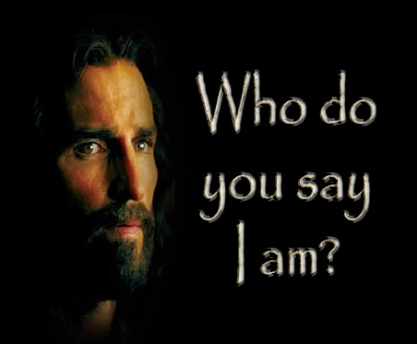
In the Gospel today Jesus asks the question: "Who do people say that I am?" (Mk 8: 27) We can look to the media to see that response or even to the attitudes and comments of people we know including our families and work mates. Inevitably, Jesus will turn to me, look me in the eyes and ask: "But who do you say that I am?" (Mk 8: 29) The answer to this question is important as it will inform both the way that I live and the way I will die. It is a profound and existential affirmation or negation of whether Jesus is Emmanuel - God with us. Are his promises true? Has he risen from the dead? Did he send the Holy Spirit to abide in me? Is he present in the Eucharist? The Mass gives us an answer but it is up to us as a community, in singing the Great Amen at the conclusion of the Eucharistic Prayer, or as an individual when I say "Amen" when receiving Holy Communion, to make the affirmation to all that has been said, sung, prayed and believed in the liturgy. The Christian life, however, is not always "beer and skittles" and is not a question of self-fulfillment of affirmation. We are also mindful of Christ's admonition to his disciples: "If any want to become my followers, let them deny themselves ad take up their cross and follow me. For those who want to save their life will lose it, and those who lose their life for my sake, and for the sake of the gospel, will save it." (Mk 8: 35)
Image result for peter at caesarea philippi

Prophecy of Fr Joseph Ratzinger from 1969

I have come across this interview conducted with the then Fr Ratzinger in 1969. His leading of the Congregation of the Doctrine of the Faith and papacy as Pope Benedict XVI lay years in the future. He had been a peritus (expert) at Vatican II and was in the process of falling out with a number of theologians with whom he had founded the periodical Concilium. He would go on the found, with others, another called Communio. His thoughts on the future  are amazing although what he says about priests being ordained and then working in a profession (worker priests) has not come to pass. Otherwise, it is seems like a premonition and we can expect the accuracy of his prophecy to continue to be worked out in the decades to come:

"The future of the Church can and will issue from those whose roots are deep and who live from the pure fullness of their faith. It will not issue from those who accommodate themselves merely to the passing moment or from those who merely criticize others and assume that they themselves are infallible measuring rods; nor will it issue from those who take the easier road, who sidestep the passion of faith, declaring false and obsolete, tyrannous and legalistic, all that makes demands upon men, that hurts them and compels them to sacrifice themselves. To put this more positively: The future of the Church, once again as always, will be reshaped by saints, by men, that is, whose minds probe deeper than the slogans of the day, who see more than others see, because their lives embrace a wider reality. Unselfishness, which makes men free, is attained only through the patience of small daily acts of self-denial. By this daily passion, which alone reveals to a man in how many ways he is enslaved by his own ego, by this daily passion and by it alone, a man’s eyes are slowly opened. He sees only to the extent that he has lived and suffered. If today we are scarcely able any longer to become aware of God, that is because we find it so easy to evade ourselves, to flee from the depths of our being by means of the narcotic of some pleasure or other. Thus our own interior depths remain closed to us. If it is true that a man can see only with his heart, then how blind we are!

How does all this affect the problem we are examining? It means that the big talk of those who prophesy a Church without God and without faith is all empty chatter. We have no need of a Church that celebrates the cult of action in political prayers. It is utterly superfluous. Therefore, it will destroy itself. What will remain is the Church of Jesus Christ, the Church that believes in the God who has become man and promises us life beyond death. The kind of priest who is no more than a social worker can be replaced by the psychotherapist and other specialists; but the priest who is no specialist, who does not stand on the [sidelines], watching the game, giving official advice, but in the name of God places himself at the disposal of man, who is beside them in their sorrows, in their joys, in their hope and in their fear, such a priest will certainly be needed in the future.

Let us go a step farther. From the crisis of today the Church of tomorrow will emerge — a Church that has lost much. She will become small and will have to start afresh more or less from the beginning. She will no longer be able to inhabit many of the edifices she built in prosperity. As the number of her adherents diminishes, so it will lose many of her social privileges. In contrast to an earlier age, it will be seen much more as a voluntary society, entered only by free decision. As a small society, it will make much bigger demands on the initiative of her individual members. Undoubtedly it will discover new forms of ministry and will ordain to the priesthood approved Christians who pursue some profession. In many smaller congregations or in self-contained social groups, pastoral care will normally be provided in this fashion. Alongside this, the full-time ministry of the priesthood will be indispensable as formerly. But in all of the changes at which one might guess, the Church will find her essence afresh and with full conviction in that which was always at her center: faith in the triune God, in Jesus Christ, the Son of God made man, in the presence of the Spirit until the end of the world. In faith and prayer she will again recognize the sacraments as the worship of God and not as a subject for liturgical scholarship.

The Church will be a more spiritual Church, not presuming upon a political mandate, flirting as little with the Left as with the Right. It will be hard going for the Church, for the process of crystallization and clarification will cost her much valuable energy. It will make her poor and cause her to become the Church of the meek. The process will be all the more arduous, for sectarian narrow-mindedness as well as pompous self-will will have to be shed. One may predict that all of this will take time. The process will be long and wearisome as was the road from the false progressivism on the eve of the French Revolution — when a bishop might be thought smart if he made fun of dogmas and even insinuated that the existence of God was by no means certain — to the renewal of the nineteenth century. But when the trial of this sifting is past, a great power will flow from a more spiritualized and simplified Church. Men in a totally planned world will find themselves unspeakably lonely. If they have completely lost sight of God, they will feel the whole horror of their poverty. Then they will discover the little flock of believers as something wholly new. They will discover it as a hope that is meant for them, an answer for which they have always been searching in secret.

And so it seems certain to me that the Church is facing very hard times. The real crisis has scarcely begun. We will have to count on terrific upheavals. But I am equally certain about what will remain at the end: not the Church of the political cult, which is dead already, but the Church of faith. It may well no longer be the dominant social power to the extent that she was until recently; but it will enjoy a fresh blossoming and be seen as man’s home, where he will find life and hope beyond death."


Wednesday, 29 August 2018

23rd Sunday in Ordinary Time

The First Reading speaks of the coming of the Lord: "Then the eyes of the blind shall be opened, and the ears of the deaf unstopped" (Is. 35: 5) and this is what Jesus does in the Gospel reading. The implications for us though is, using the Second Reading, does the proclamation of the Gospel in our midst, open our eyes to the suffering in the community and unstop our ears to the cries of those in need of our help? At the start of Social Justice Week, which this year has the theme of "Enabling Communities" we are challenged to see how each one of us can play a part in enabling community in the parish, the church and wider society. So many people are lonely, isolated and deprived of human contact as well as lacking the financial resources to pay for their basic needs. Divorce, drug addiction, mental illness, a lack of religious affiliation or tradition and other factors mean that despite all of the technology at our disposal many people are affected by a lack of community than ever before. Let us discern how we can best meet the needs of others so that our own need of community may be met. Let us open our hearts to the Lord so that the Holy Spirit may guide us and the intercession of the Blessed Virgin sustain us as we work for the Kingdom which is the community of those who will be gathered to God for eternity. 

Image result for community

Monday, 27 August 2018

22nd Sunday in Ordinary Time

As Gentile Christians of the Roman Rite of the Catholic Church in the Twentieth First Century our cultural and theological context is very different from that facing the community for whom St Mark wrote at the time of his Gospel. For us the washing of hand before eating and the cleaning of dishes is merely a matter of hygiene whereas, for Jews of the First Century, such practices had greater cultural, religious and hence political significance. The squabbles between Sadducees, Pharisees, Essenes and Zealots mean that there was no single perspective on how Jews should live and what they should believe. The tendency of these groups to fight for precedence and status, even within their own party, meant that the wider issues of injustice, mercy and love were being ignored as they fought over details of liturgy and custom. I do not think that Jesus and the first Christians were advocating the destruction of custom, tradition and practice since Jesus and the Apostles are shown throughout the Scripture as being observant Jews, according to the law and custom of the time. Rather, the concern is that these find their proper place in service of the mission given by Christ to the Church. We do not want the squabbles between Catholics on matters of lesser importance, let alone with other Christians, to undermine our response to Christs commission to "Go therefore and make disciples of all nations, baptizing them in the name of the Father and of the Son and of the Holy Spirit and teaching them to obey everything that I have commanded you." (Mtt 28: 19-20) The last thing we want to hear, when we meet the Lord face to face, to account for our stewardship of the Good News is: "You abandon the commandment of God and hold to human tradition." (Mk 7: 8)

Image result for washing of cups and pots

Monday, 13 August 2018

20th Sunday in Ordinary Time

It is interesting to see in the Gospels how the people and even the disciples "dispute among themselves." It happens when they argues about who is the greatest (Lk 9: 46), when they are confused about Jesus' teaching regarding the multiplication of the loaves (Mk 8: 16) and the request of James and John (Mk 10: 41). Today the argument arises over: "How can this man give us his flesh to eat?"  (Jn 6: 52) Our minds reel at the incredible claims that the Lord makes for himself but his miracles and the power of his love hold us transfixed. Jesus never backs down or waters down his teaching to make it more palatable. After all his teaching in this Gospel is as offensive and controversial now as it ever was. The Church of today, like the early disciples, needs to listen to the Lord and allow him to open our minds to the mystery of his humanity and divinity. If we lose sight of either we will slip into error. His presence in the Holy Eucharist is what St Thomas Aquinas acclaimed as the greatest of his miracles. Let us not be overwhelmed by the awesome nature of our God but obey his call to follow Christ Jesus and do as he told us to do. I encourage parishioners to have a look at Eucharistic miracles and deepen their belief in and desire for this wonderful gift of the Lord himself. One web page to look at is: www.therealpresence.org/eucharst/mir/a3.html

Image result for eucharistic miracle

Thursday, 9 August 2018

Solemnity of the Assumption of the Blessed Virgin Mary

In the Scriptures we hear that in Jesus: "we have one who in every respect has been tested as we are, yet without sin." (Heb 4: 15) Yet, his Resurrection was that of the Second Person of the Holy Trinity and was thus of a different character. St Paul writes: "... for as all die in Adam, so all will be made alive in Christ. But each in his own order: Christ the first fruits, then at his coming those who belong to Christ." (1 Cor 15: 22-23) The Catechism fo the Catholic Church tells us: "As for the Son, he effects his own Resurrection by virtue of his divine power." (CCC 649)The resurrection of the rest of the human race comes about through Christ: "Finally, Christ's Resurrection - and the risen Christ himself - is the principle and source of our future resurrection" (CCC 655). The Blessed Virgin shares in the fullness of life through Christ and her joining herself perfectly with his sacrifice on the Cross. Having been joined with him in life she is also joined with him in his resurrection. Unlike us she has not and will not experience corruption but has been glorified in her body and spirit as a sign of the Church's destiny: "The Assumption of the Blessed Virgin is a singular participation in her Son's Resurrection and an anticipation of the resurrection of other Christians." (CCC 966)To this end she still accompanies the Church through her maternal solicitude and intercession which remains as powerful as it was when she was at the wedding feast of Cana and prayed with the Church at Pentecost.

Image result for assumption of the blessed virgin mary