Saturday, 24 September 2016

Reflection from Retreat

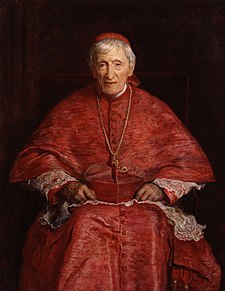
While on retreat last week this reflection from St. John Henry Newman's "Meditations and Devotions" struck me as being particularly powerful:

                         To possess thee, O Lover of my soul, is happiness,
                         and the only happiness of the immortal soul!
                         To enjoy the sight of thee is the only happiness of eternity.
                         At present I might amuse myself with the vanities of sense and time,
                         but they will not last for ever.
                         We shall be stripped of them when we pass out of this world.
                         All shadows will one day be gone.
                         And what shall I do then?
                         There will be nothing left to me but Almighty God.
                         If I cannot take pleasure in the thought of him,
                         there is no one else then to take pleasure in;
                         God and my soul will be the only two beings left in the whole world
                         so far as I am concerned.
                         He will be all in all, whether I wish it or no.
                         What a strait I shall then be in if I do not love him,
                          and there is nothing else to love!
                          

Thursday, 15 September 2016

First Communion

First Communion is always a special time for children, family and the parish. Youngsters, most of whom were baptised as infants, now come forward under their own steam to receive the Lord. In this age we tend to emphasise the ecclesial nature of receiving Holy Communion. As a result, we do not stress the need for a pure conscience as a pre-condition to receiving the Host and the Precious Blood. This is evident in the low numbers of people frequenting the confessional on Saturday mornings. This I think is a positive things as the Eucharist is not a reward for good behaviour but is itself a means of reconciliation and healing. We tend to look at how the Eucharist binds us as Church and focus on our willingness to participate in her mission as members of the Body of Christ.  Nevertheless, the Eucharist does continually challenge us to repent of our sins and to strive to live a better life. As a Communion sacrament, a sacrifice sacrament and a meal sacrament it is a great mystery yet we can know this for certain - it is an encounter with Christ. Whether we respond to this reality as Mary and Martha, Peter, Zacchaeus, Nicodemus or others did in the Gospels depends on us. Whatever my situation is the Eucharist should never leave me unchanged. Even if that means I leave Church feeling gratitude and joy for being blessed with faith and embark on my week with a light heart I can be assured that the Eucharist is at work in me. 

26th Sunday in Ordinary Time

Today we hear about the Rich Man (or Dives as he is called sometimes) and Lazarus. I think that we are often tempted to see this parable as referring to others. To apply it to ourselves is discomforting. Often we do not think of ourselves as rich. We think of others who have more than us. Perhaps, Dives would have said that too as he looked at Herod and the High Priest, or even the Roman Emperor himself, in comparison. Yet, it remains, Dives is in torment and Lazarus is in paradise. Imagine looking at things from the point of view of Lazarus today. Individually, would he look at me as rich, or collectively, would he, as a nation, look at New Zealand as rich, acting as Dives did? Dives dressed, ate and lived in luxury without a thought for Lazarus to whom he gave nothing. Even, tormented in flames in Hell, he thinks of Lazarus as his servant and of Abraham as his father. Such self-indulgence, arrogance and disregard for others is clearly noxious to God, so much so, that there is a great chasm fixed between Abraham and Dives which no one can cross. Is there a chasm in my heart? Do I wallow in entitlement and self-justification? For Dives it was too late but for me I can bridge the chasm, here and now, through prayer, mercy and almsgiving. Selfless acts of mortification mean we die to Dives and live to Christ. 


Monday, 12 September 2016

Twenty Fifth Sunday in Ordinary Time

Jesus speaks to us today about the danger of greed. It not only distorts the minds and lives of those who are greedy but also brings misery and suffering to those whom they exploit with their schemes. Those afflicted by greed are never satisfied. Like most sins it has a compulsive element to it that robs life of pleasure. The individual is enmeshed in the consequence of his or her own obsessions and is ultimately shown to worship a false God. St Paul tells us: "Put to death, therefore, whatever in you is earthly... greed (which is idolatry)." (Col. 3: 5) Jesus is unequivocal: "You cannot serve God and wealth." (Lk. 16: 13) Greed, in turn, leads to death: "For the wages of sin is death" (Rom. 6: 23). If we are slaves to greed our end is certain not only after after death but also in the here and now. Some people can even be said to be dead while they are alive. Just as narcotics can consume people and hollow them out so too can the desire for money and the possessions we can obtain with it bring desolation and sadness. How can I know satisfaction? How can I avoid the addiction of possessions and aspiration? The fourth of the Beatitudes taught by Jesus, in the Sermon on the Mount, promises: "Blessed  are those who hunger and thirst for righteousness, for they will be filled." (Mtt 5: 6) 

Tuesday, 30 August 2016

Twenty Fourth Sunday in Ordinary Time

The parable of the Prodigal is one of the most memorable and powerful of Jesus' parables. I think it grows in effect if we place it in continuity with the shorter parables that precede it and keep in mind the audience that listened to it. The self-righteous, judgmental Pharisees and scribes were obsessed with legal and ritual purity. They had no desire to help or empathise with the tax collectors and sinners. Rather their impulse was to condemn Jesus for associating with the the objects of their scorn. What a contrast we get with the joy of the shepherd who searches out the lost sheep and the woman who finds her lost coin! On both occasions they say "Rejoice with me." (Lk 15: 6 and 9) Similarly the father of the Prodigal says the the Elder Brother: "... we had to celebrate and rejoice." (Lk 15: 32) This challenges me to ask what my attitude is towards people who struggle morally or religiously as well as those who try to help them. Do I condemn the helpers? If the person repents do I rejoice? If I am filled with such joy then I am in tune with the mind of God and the angels: "Just so, I tell you, there is joy in the presence of the angels of God over one sinner who repents." (Lk 15: 10) Even better, will that joy give me the inclination to reach out to people who struggle and show them the kind of love illustrated by the father as he welcomed back his son: "But while he was still far off his father saw him and was filled with compassion; he ran and put his arms around him and kissed him." (Lk 15: 20) 

Monday, 29 August 2016

Twenty Third Sunday in Ordinary Time

Jesus says: "For which of you intending to build a tower..."? (Lk 14:28) The question I can ask myself is what tower am I building? What is the project of my life? When I look at other day to day aspects of my life I automatically do a cost/benefit analysis yet am I capable of doing that with the "big picture"? What is ultimately at stake is salvation and the judgement that will be made of my life, not in the eyes of my neighbours and friends, but of the Lord: "For all of us must appear before the judgment seat of Christ, so that each may receive recompense for what he has done in the body, whether good or evil." (2 Cor. 5: 10) It is clear from the Gospel that whatever we have in prospect on earth fades into comparison with what is in store for us in the life to come: "For this slight momentary afflication is preparing us for an eternal weight of glory beyond all measure, because we look not at what can be seen but at what cannot be seen; for what we can be seen is temporary, but what cannot be seen is eternal." (2 Cor. 4: 17-18) Let us never forget that our destination is not of this world but our experience of it will be affected by what we do in this world. The stakes are high. Jesus warns us: "For what will it profit them to gain the whole world and forfeit their life? Indeed, what can they give in return for their life? Those who are ashamed of me and of my words in this adulterous and sinful generation, of them the Son of Man will also be ashamed when he comes in the glory of his Father with the holy angels." (Mk 8: 36-38)

Monday, 22 August 2016

Twenty Second Sunday in Ordinary Time

When we read the Gospel it pays to remember that the designation "Pharisee" is not fixed in time, applying only to members of that sect among the Jews. Even by the time of St Luke the destruction of Jerusalem in AD 70 meant that the whole Jewish religious landscape had changed. The term "Pharisee" functions to refer to a misguided disciple in need of correction. Thus, it pays for us as disciples, who tend to get things wrong, mixed up or out of proportion, to test the authenticity of our discipleship by applying what is said by Jesus to the Pharisees to ourselves. Today Jesus teaches: "When you give a luncheon or a dinner, do not invite your friends (etc) ... in case they may invite you in return, and you would be repaid." (Lk 14: 12) Is it the case that all of my hospitality is directed towards people who I like and who will reciprocate? How often am I generous or welcoming to people who cannot repay me and who give me no social advantage? Maybe I should, in this Year of Mercy, make an effort to offer hospitality to someone who is not in my social circle. "And you will be blessed, because they cannot repay you, for you will be repaid at the resurrection of the righteous." (Lk 14: 14)