In the First Reading we hear of the wisdom of God at the beginning of Creation: "... and I was daily his delight, rejoicing before him always, rejoicing in his inhabited world and delighting in the human race." (Prov 8: 30-31) What a contrast this is to the cold, impersonal deity imagined by the theists and other philosophies/religions! The Holy Trinity is an infinite, dynamic, synthesis of perfect love. This, nevertheless, still sounds somewhat impersonal. Yet, love is necessarily relational so, although our discourse on the nature of God often takes a philosophical turn, the God perfectly revealed in Christ Jesus is both omnipotent and personal, eternal and incarnated, just and merciful. We could not have known this without the revelation given us in Jesus Christ and through the gift of the Holy Spirit. Other religions and world views necessarily are constrained by the limitations of human reason which struggles to comprehend or even consider so great a mystery. Christian need to be confident that God's revelation of himself, in Jesus Christ, is reliable even if it seems incredible. To help us we have the Holy Spirit who guides us to the truth even when our intellects struggle: "When the Spirit of truth comes, he will guide you into all the truth; for he will not speak on his own, but will speak whatever he hears, and he will declare to you the things that are to come." (Jn 16: 13)
Tuesday, 11 June 2019
Monday, 3 June 2019
Pentecost
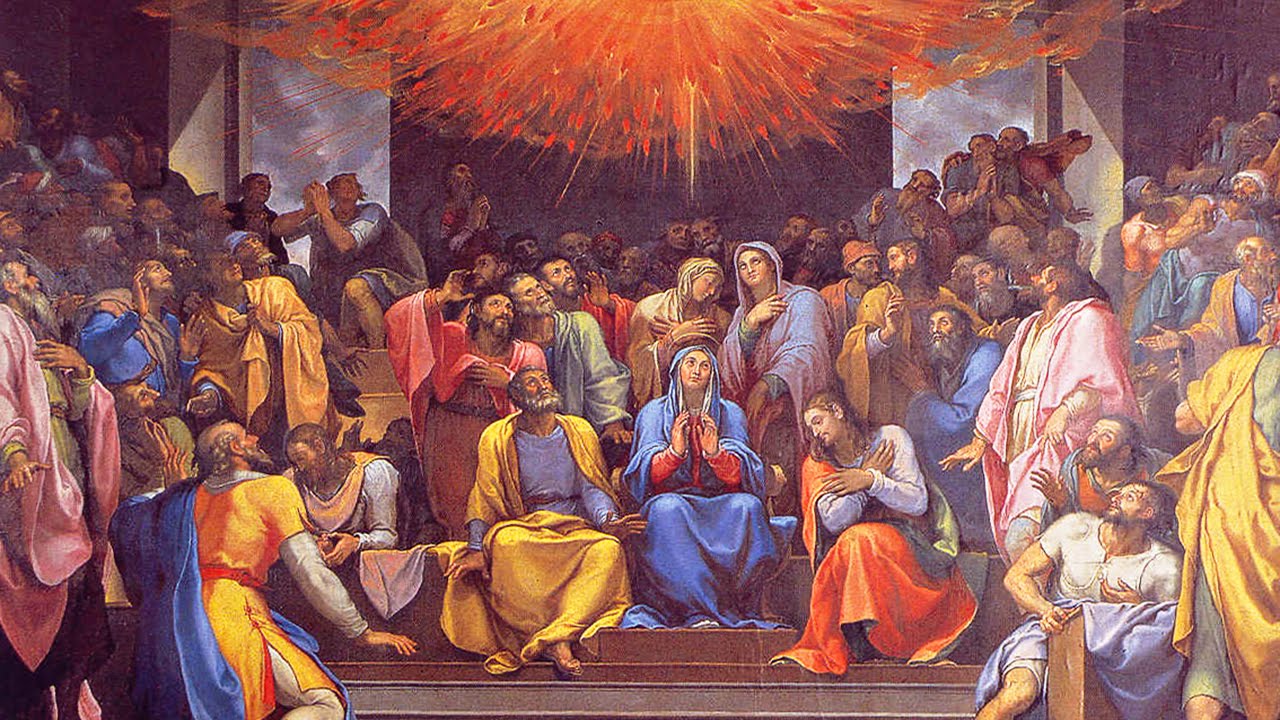
Last Sunday we entered into the mystery of the Ascension when Christ brought an end to his earthly ministry. Today we celebrate the mystery of the Church which prolongs, in a sacramental way, the presence and action of Christ in the world. As we gather at Mass we need to be aware of just how special it is to be Church and the role each one of us is called to play in the divine plan for the salvation of the world. Church doctrine teaches: "By an utterly free and mysterious decree of His own wisdom and goodness, the eternal Father created the whole world. His plan was to dignify men with a participation in his own divine life. He did not abandon men after they had fallen in Adam, but ceaselessly offered them helps to salvation, in anticipation of Christ the Redeemer... All the elect, before time began, the Father 'foreknew and predestined to become the image of his Son, that he should be the firstborn among many brethren' (Rom 8: 29)." He planned to assemble in the holy Church all those who would believe in Christ. Already from the beginning of the world the foreshadowing of the Church took place. She was prepared for a remarkable way through the history of the people of Israel and by means of the Old Covenant. Established in the present era of time, the Church was made manifest by the outpouring of the Spirit." (Lumen gentium, 2) It is this same Church, enlivened by that same Spirit, that gathers in our church buildings today with the same mission and purpose. The Catechism tells us: "thus the Church's mission is not an addition to that of Christ and the Holy Spirit, but is its sacrament in her whole being and in all her members, the Church is sent to announce, bear witness, make present, and spread the mystery of the communion of the Holy Trinity." (CCC 738). With this in mind let us open our hearts to the Holy Spirit today so we may be filled with his gifts and bearers of his fruits.

Friday, 24 May 2019
Ascension of the Lord
The Ascension of the Lord is, at first glance, a puzzling mystery. St Luke, in his gospel, has Jesus carried up into heaven at the end of the Resurrection day, while in his second book, The Acts of the Apostles, acknowledged in its opening line as being a sequel to the gospel (Acts 1: 1), Jesus ascends after forty days of appearances and teaching (Acts 1: 3). The account in St Mark's gospel (Mk 16: 19) and the Great Commission of St Matthew (Mtt 28: 16-20) are different again while St John has no Ascension account at all. Nevertheless, in the liturgical calendar, we celebrate the latter Lukan version as we prepare for the great feast of Pentecost on the fiftieth day after Easter Sunday. The Bishops' Conference feel the feast is so important that the observance of the feast has been moved from the Thursday, which would be the literal fortieth day after Easter Sunday, to a Sunday. In this way more of the faithful are able to reflect on the significance of what is described in Eucharistic Prayer III as "his wondrous Resurrection and Ascension into heaven." Without explaining all the reasons for the differences in the Scriptural accounts, it is clear that the Ascension is important to our spiritual reality. The prefaces for the Solemnity help us to understand why: "... he ascended, not to distance himself from our lowly state but that we, his members, might be confident of following where he, our Head and Founder, has gone before" (Preface I of the Ascension), and, "(he) was taken up to heaven in their sight, that he might make us sharers in his divinity." (Preface II of the Ascension). In addition, Eucharistic Prayer I states further: "Celebrating the most sacred day on which your Only Begotten Son, our Lord, placed at the right hand of of your glory our weak human nature, which he had united to himself...". We can see from all of this that the Ascension plays an integral part in our understanding of the implications of the Incarnation which means the divinization of the human race through Christ Jesus. Let us pray that our minds be opened to the greatness of this mystery so that our hearts will be filled with longing to join with the Lord in his glory even as we struggle with our own difficulties of our earthly existence.
Monday, 20 May 2019
6th Sunday of Easter
In the Gospel this week we are pointed by the Lord to the impending sending of the Spirit: "But the Advocate, the Holy Spirit, whom the Father will send in my name, will teach you everything, and remind you of all that I have said to you," (Jn 14: 26) The mystery of Christ is that his incarnation, unlike the lives or ordinary people, does not fade away along with the photographs, videos and Facebook pages. Rather, through the working of Holy Spirit the resurrection amplifies and universalizes the presence of the once lowly carpenter of Nazareth. " 'The first man , Adam, became a living being'; the last Adam became a life-giving spirit." (Rom 15: 45) The Church, with her sacraments, is a prolongation of the Lord's ministry. In Easter tide 2019 we must all have a thirst for the Holy Spirit so that our personal and collective efforts to transform our own lives and to bring others to know Christ bear fruit. As we lead up to the feasts of Ascension and Pentecost let us pray fervently for the Holy Spirit to teach us what Christ taught and remind us what he said. After all we have the promise that the Holy Spirit it available for those who request him: "If you then,who are evil, know how to give gifts to your children, how much more will the heavenly Father give the Holy Spirit to those who ask him!" (Lk 11: 11)
Wednesday, 8 May 2019
5th Sunday of Easter
Jesus says: "I give you a new commandment, that you love one another. Just as I have loved you, you should also love one another." (Jn 13: 34) What is this love? St Paul teaches: "But God proves his love for us in that while we were sinners Christ died for us." (Rm 5: 8) This teaches us that the authenticity of Christian love is proved by the way in which we love others when they are either our enemies or have sinned. Such love does not require apologies or restitution. In the final analysis it is the way of the Cross. Jesus from the cross prayed: "Father, forgive them; for they do not know what they are doing." (Lk 23: 34) It is the love and forgiveness that we have known in Christ Jesus that gives us the ability to love those who do not love us. We can see around the world the endurance of Christians who are being persecuted for the faith. Let us be in solidarity with them as well as praying for those who, for whatever reason, hate us. Then we will be imitating our Lord and inherit the blessings he has promised: "But love your enemies, do good, and lend, expecting nothing in return. Your reward will be great, and you will be children of the Most High; for he is kind to the ungrateful and the wicked. Be merciful, just as your Father is merciful." (Lk 6: 35-36)

Wednesday, 1 May 2019
4th Sunday of Easter
Today is often referred to as Good Shepherd Sunday. It is an opportunity for the faithful to remember the importance not only of Christ the "Good Shepherd" but also those whom he calls to act as shepherds of the flock which is his Church. We are also asked to financially support our seminarians in their studies With the turmoil and scandals of the present time many voice are raised to challenge both the need for and nature of ordained ministry. To this end it is necessary to reiterate some of the non-negotiable aspects of the ordained:
- "The reservation of the priesthood to males, as a sign of Christ the Spouse who gives himself in the Eucharist, is not a question open to discussion..." (Evangelium gaudium, 104)
- The common priesthood of the baptized and the ordained priesthood: "differ from one another in essence and not only degree..." (Lumen gentium, 10) Therefore, the distinction re non-ordained and ordained is not made on the basis of function but on how each vocation is for others.
- This diversity in the priesthood is not found in Christ but in the mode of participation in his priesthood (Ecclesiae de mysterio, 1).
- "The ministerial priesthood is necessary for a community to exist as 'Church.' " (Ecclesiae de mysterio, 3)
- Extraordinary ministers within the liturgy by definition exist outside of the hierarchical ministry with which they are called to cooperate: "Temporary deputation for liturgical purposes... does not confer any special or permanent title on the non-ordained faithul." (Ecclesiae de mysterio, Article 1)
- "... priests as co-workers with their bishops, have as their primary duty (Latin: primum officium) the proclamation of the Gospel of God to all." (Presbyterorum ordinis, 4) Thus, the proclamation of the Gospel and the homily are as much a part of the duties of the priest as the praying of the Eucharistic Prayer.
Hopefully, these doctrinal pointers help us to understand why the ordained ministry is not a dispensable or man-made aspect of the life of the Church but is integral and essential to her being. This, furthermore, should encourage is to promote and pray for vocations to the priesthood.

Thursday, 25 April 2019
3rd Sunday of Easter
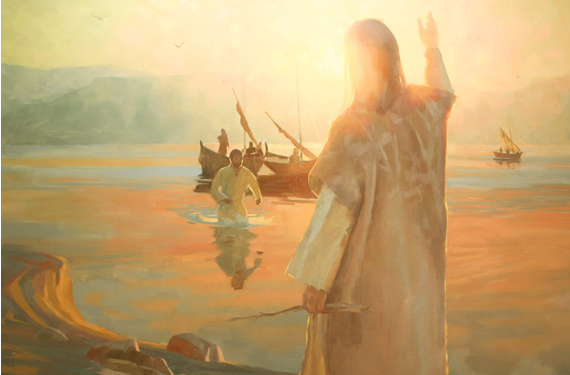
In the Gospel today we hear of the risen Christ living out what he taught while he was engaged in his earthly ministry. This should not be a surprise since, after all: "Jesus Christ is the same yesterday and today and forever." (Heb 13: 8) Yet, the reluctance of some to come to the Church for the sacrament of reconciliation speaks of a mistrust of God's mercy or an image of God that is at odds with what we know of Christ Jesus. Today we have an excellent example of that mercy as Jesus rehabilitates Peter after the disciple, to whom he said, "and on this rock I will build my church" (Mtt 16: 18 ), denied him. What is important for Christ is not Peter's denial and cowardice but his willingness to love the Lord and to feed the sheep as he has called Peter to do in the first place. All those who fail to live their faith are likewise called upon to trust in the Lord's mercy and to re-commit themselves to following his example of love and service. The thing that should amaze others is not so much that we fail but that we pick ourselves up and, entrusting ourselves to God's mercy, keep going regardless of what life, sin and death throw at us.

Subscribe to:
Posts (Atom)