Tuesday, 25 February 2020

1st Sunday of Lent

In today's Gospel I was intrigued by the statement at its outset: "Jesus was led up by the Spirit into the wilderness to be tempted by the devil." (Mtt 4: 1) There is a number of issues here. First, Jesus was "led up by the Spirit." This is the same Spirit that was shown, in the previously verses, as descending upon Jesus like a dove. Thus, Baptism is not shown to be static but future oriented. The presence of the Spirit also speaks of prayer. Jesus was not self directing, as we see frequently in the Gospel of Luke, but always turned to prayer before making important decisions. This give us an example to always turn to the Holy Spirit in our own vocations and discernment of what to do with our lives. Second, Jesus is led up by the Spirit "into the wilderness." The Holy Spirit, when we open our hearts to him, frequently does not allow us to stay in our comfort zone. A prelude to growth and/or mission is a time of testing, doubt and even suffering. Jesus is not spared this. Third, the purpose of this going into the wilderness is one of spiritual warfare. This combat will reach its climax in the Garden of Olives during the Passion. Again, this shows Jesus being like us although being without sin. It might be seen as scandalous that Jesus could be genuinely tempted, since this speaks of the possibility that he could give in to it. However, the write of the Letter to the Hebrews reasons thus: "It was fitting that God, for whom and through who, all things exist, in bringing many children to glory, should make the pioneer of their salvation perfect through sufferings. For the one who sanctifies an those who are sanctified all have one Father." (Heb 2: 10-11) In this way, the temptations in the desert reveal how perfectly human Jesus is, in his divinity, so that salvation might be ours through his suffering.
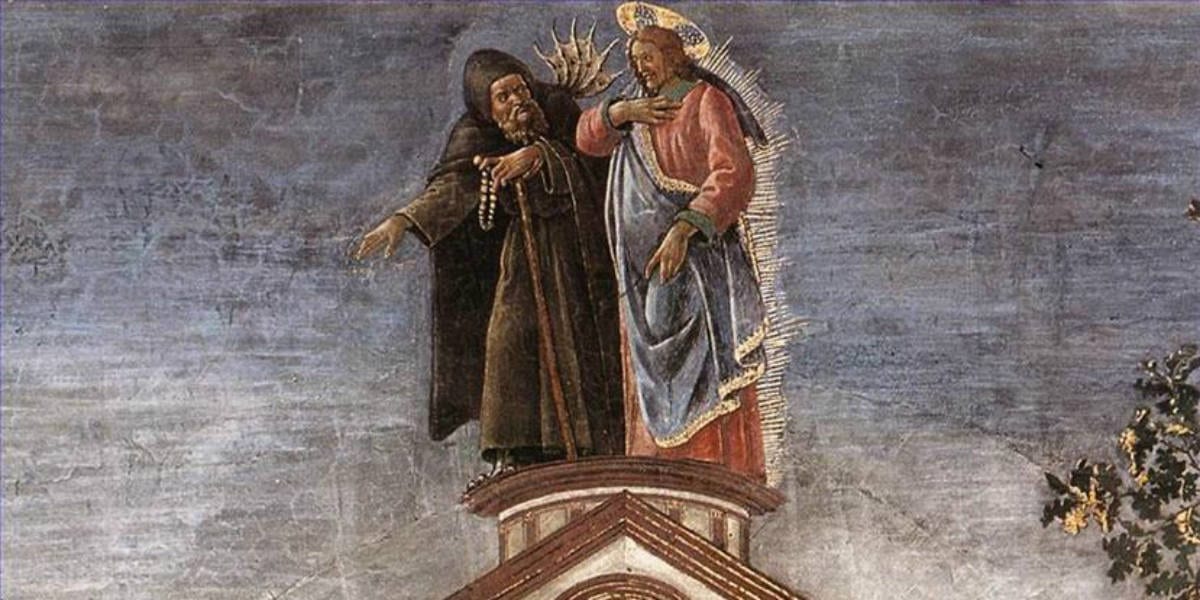
Image result for temptations in the desert

Monday, 17 February 2020

7th Sunday in Ordinary Time

Last Sunday we had some difficult teachings which challenged both us and the Early Christians to have a righteousness which exceeds that of the scribes and Pharisees (cf Mtt 5: 20). Both of these groups were proverbial for observing the letter of the law. Today we are challenged again: "For if you love those who love you, what reward do you have? Do not even the tax collectors do the same?" (Mtt 5: 46) This new and greater standard of love is required of us individually and as Church. We are all called to go outside of our "comfort zone" when it comes to interacting with others even when they are indifferent or even hostile to us. How can we do this? The answer lies in our knowledge that God has loved us first and we have received so much from Him: "You received without payment; give without payment" (Mtt 10: 8) and "Beloved, since God loved us so much, we also ought to love one another. No one has ever seen God; if we love one another, God lives in us, and his love is perfected in us." (1 Jn 4: 12) 

Image result for sermon on the mount

Saturday, 8 February 2020

6th Sunday in Ordinary Time

Today for our Gospel we have a long passage from the "Sermon on the Mount." This is the new law of the new Moses. Some of the Pharisees and Sadducees thought that Jesus was soft or lax when it comes to law. This is because he embodied the love and mercy of God and, furthermore, saw law as being there to serve human beings rather than to be in tyranny over them. In other words he did not use the law as a mechanistic way to sanctity. Rather, he looks to a conversion of heart that ultimately mirrors the love of the heavenly Father. Let us all be alert to our own attitude towards law. We need to understand, in the depths of our being, the joy and love of Christ that transforms our understanding and living out of the law. 

Image result for jesus and the pharisees

Friday, 7 February 2020

5th Sunday in Ordinary Time

In today's Gospel Jesus asks the rhetorical question: "You are the salt of the earth; but if salt has lost its taste, how can its saltiness be restored?" (Mtt 5: 13) When I see in the Catholic Parish of Hastings that in a city of 80, 000 people we have 5 who wish to either be baptized or come into full communion with us. It is not hard to think that something is lacking. That the salt of our faith is losing its taste. This goes the same for the rest of the Catholic Church in New Zealand. Likewise, out of a notional number of Catholics, say 8,000, we have approximately 10% attending Mass on a Sunday. Look at the schools, we see hundreds of children and their parents as well as teachers, and only a tiny minority joining with us for Sunday Eucharist. How, indeed, can salt recover its taste? Fortunately, we have the example and teaching of Pope Francis to show us the way. He challenges all the baptized to become missionary disciples and to bring the joy of the Gospel to the world. This joy, like the city built on a hill, is such that it cannot be hidden away: "... let your light shine before others, so that they may see your good works and give glory to your Father in heaven." (Mtt 5: 16) 

Image result for city on a hill

Monday, 3 February 2020

4th Sunday in Ordinary Time

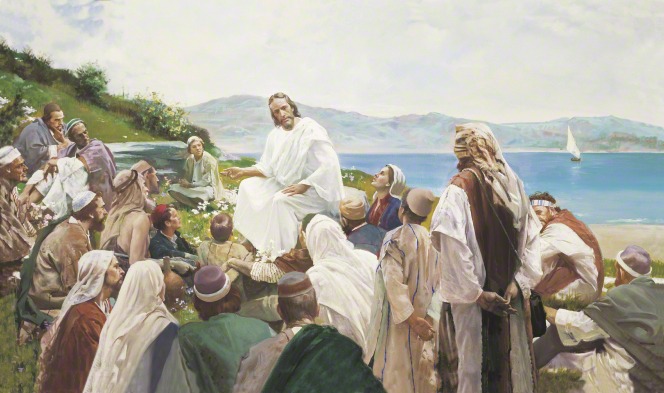
Most scholars writing on the Gospel of Matthew agree that the structure of the Gospel is underpinned by five books. These books are reminiscent of the Pentateuch, that is, the first five books of the Jewish law or Torah which were reputed to have been written by Moses. In the Book of Deuteronomy the people are promised by God that he will raise up a prophet like Moses for them (Deut 18: 15). Jesus, as the Messiah, is the new Moses and he ascends the mountain to inaugurate a new age with new law. This new law is summarized in the Sermon of the Mount and is found in its most concentrated form in the Beatitudes that we hear today. The Ten Commandments is comprised largely of prohibitions whereas the Beatitudes speak of blessing. As a people of the New Covenant our first port of call is the teaching of Jesus whose law takes us to a higher and more exacting standard compared to that of the Old Testament.

Image result for sermon on the mount"

Sunday, 26 January 2020

Presentation of the Lord

The figures of Simeon and Anna call to mind for me the many elderly parishioners over the decades who have witnessed to the faith especially in their attendance at daily Mass. Their presence gives great support to priests in their ministry and their prayers, petitions and personal example links us to the many people who have gone on ahead of us in the journey of faith. At the Sunday Mass, as grandparents and great grandparents or aunts and uncles, they are a core of fidelity and loving concern especially for those who have a weak sense of faith or cannot pray for themselves for whatever reason. Often, it is through their good offices that children and grandchildren are brought to the sacraments or supported in the Catholic schools. In this way Anna and Simeon are patron saints of the weekday Mass goer and all those for whom often prayer is the greatest tool in bringing about healing, tradition and unity in family and community life.

Image result for grandparents praying


Tuesday, 21 January 2020

3rd Sunday in Ordinary Time

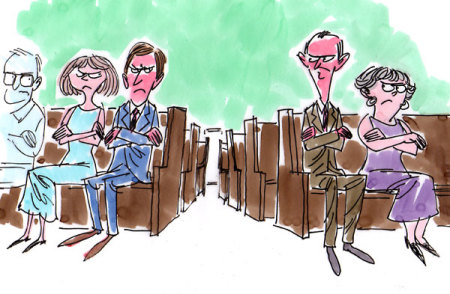
Looking at the Second Reading today it strikes me as significant that St Paul, with a great range of issues in mind, including the nature of the Lord's Supper and the Resurrection, elected to deal with division in the church as his first issue to be addressed. Division, schism and apostasy are toxic to ecclesial life. People do not like to worship in a divided community and will sooner walk away that put up with all of the conflict. Often the only ones left are those who, pushed by pride, fight on in an ever more bitter civil war in which no one is the winner. That is why we should all be mindful of how each of us uses actions and words both inside and outside the liturgy or church building. Is it to foster unity and communion or is it to bring scandal, disunity and conflict. We must never forget that the Church, as much as it is the People of God, is also the mystical Body of Christ. Just as cancer destroys a biological body internal conflict ruins churches. I encourage all parishioners to be mindful of their obligation to treat Church authorities with respect especially Pope Francis. 

P.S. This is my last contribution to the Sunday bulletin in Whanganui. I am grateful for the privilege of being able to use this forum to share matters of faith and Scripture. Feedback has always been appreciated. I will continue to write when I am in Hastings and those reflections will be posted, as they are now, on my blog: My Weekly Blurb - Scripture for Today at marcusfrancis.blogspot.com

Image result for disunity