Thursday, 29 June 2017

13th Sunday in Ordinary Time

"Whoever welcomes you welcomes me," says the Lord. How can that be when we are sinners and he is the Way, the truth and the Life? As long as we live out of our ego and strive to assert it in the world we are not going to live as he did, speak as he did and pray as he did. St paul tells us, "But if we have died with Christ, we believe that we will also live with him." (Rom 6: 8) Our identification with Christ is the key to how the world with treat us. This means we need to die to ourselves: "Those who find their life will lose it, and those who lose their life for my sake will find it." (Mtt 10: 39) Only when our lives are conformed to Christ and we are united to him as our heavenly bridegroom can we truly says that the promises given in the Gospel will be true for us.


Thursday, 22 June 2017

Sacred Heart of Jesus

How is it that people defy Jesus? He says: "Take my yoke upon you, and learn from me; for I am gentle and humble of heart, and you will find rest for your souls." (Mtt 11: 29) In this age of individualism we accept no yoke and will not learn. In the song "My Way" the lyrics state: 

For what is a man, what has he got?
If not himself, then he has naught.
To say the things he truly feels; 
And not the words of one who kneels.
The record shows I took the blows -
And did it my way!

In the contemporary mind there is an heroic aspect to the defiant and self justifying individual who lives a lonely life on a lonely planet in a lonely Universe. There is no rest. The person plaintively demands: "You must accept me as I am!" What a contrast to the lives of the saints! They endure burdens, suffering and persecution and through it all they are sustained by the one who has loved them. The heart of the Lord feels for all humanity not just as an abstract but for each and everyone, epecially the small ones - those who trust in him. Lonely and crushed we may be at times but we are never alone and never unloved. What a contrast to the sentiments of "My Way"! St Paul, about to be martyred for the faith wrote: "At my first defense no one came to my support, but all deserted me. May it not be counted against them! But the Lord stood by me and gave me strength, so that through me the message might be fully proclaimed and all the Gentiles might hear it. So I was rescued from the lion's mouth. The Lord will rescue me from every evil attack and save me for his heavenly kingdom. To him be glory forever and ever. Amen." (2 Tim 4: 16-18)


Saturday, 17 June 2017

12th Sunday in Ordinary Time

The Gospel today counsels against fear: "Have no fear ... Do not fear ... rather fear him who ... So do not be afraid ...". If one of the major messages of Jesus Christ was against us being afraid why is it, over the centuries, fear has been a domiant feature in catechesis? Why were children and adults instilled so much with fear so as to ensure their practise of the faith and compliance with religious rules? I think it is because fear is used routinely in other areas of life. It is quicker and easier to get someone to do what is the correct thing to do by frightening them rather than the long and difficult road of persausion and love. Yet, Christ goes by the latter option. On the way to Emmaus he listened to the disciples, walked with them and taught them again the Good News. St John writes: "There is no fear in love, but perfect love casts out fear; for fear has to do with punishment, and whoever fears has not reached perfection in love." (1 Jn 4: 18-19) If we wish to mature in faith and be perfected in love we need to conquer fear and trust solely in God's mercy and love which is revealed fully in Christ Jesus. After all, the Lord assures us: "So do not be afraid; you are of more value than many sparrows." (Mtt 10: 31)

Monday, 12 June 2017

The Most Holy Body and Blood of Christ

Jesus says in today's Gospel: "Those who eat my flesh and drink my blood have eternal life, and I willl raise them up on the last day; for my flesh is true food and my blood is true drink." (Jn 6: 54-55) The Eucharist is for eating and drinking! He does not ask, primarily, that we worship his Sacred Body and Precious Blood. That is a consquence of understanding the enduring character of the Eucharisti species. No, he wants us to eat and to drink. This I think is because by eating and drinking we are united to him: "Those who eat my flesh and drink my blood abide in me, and I in them." (Jn 6: 56) It is not, therefore, a question of nourishment but of Communion. The reception of Eucharist binds us more perfectly to him and to one another. As we hear from St Paul: "Because there is one bread, we who are many are one body, for we all partake of the one bread." (1 Cor 10: 17) I prefer to think of the Eucharist less as a reward for moral probity and more as a instrument and sign of Covenant. None of us can ever be worthy of the Eucharist yet the attitudes and desires of those who wish to be true disciples of Christ are essential to a fruitful partaking in the mystery of Christ's Body and Blood. The behaviour of the disciples towards each other, St Paul tells us, is relevant to how we receive Eucharist: "When you come together, it is not really to eat the Lord's supper. For when the time comes to eat, each of you goes ahead with your own supper, and one goes hungry and another becomes drunk. What! Do you not have homes to eat and drink in? Or do you show contempt for the church of God and humiliate those who have nothing? What should I say to you? Should I commend you? In this matter I do not commend you!" (1 Cor 11: 21-22) There is no room for individualism, political division or class distinctions in the Mass. By eating and drinking we are made one and that unity means we treat one another as brothers and sisters of the one family.

Saturday, 10 June 2017

Trinity Sunday

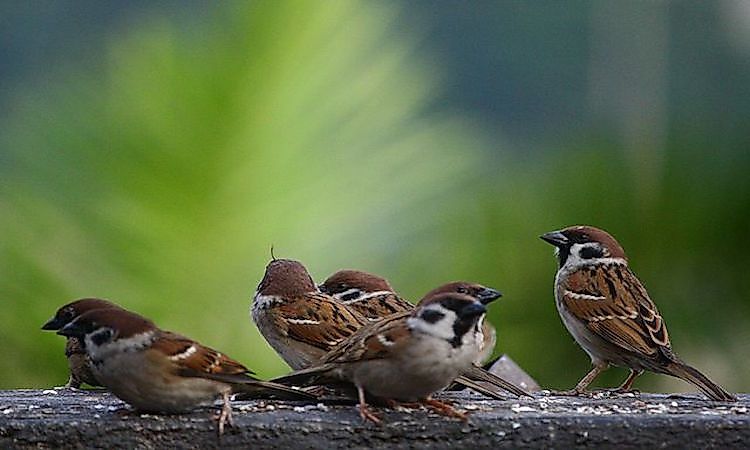
As Christians we must resist any temptation to think of God as impersonal. Jesus states: "Are not five sparrows sold for two pennies? Yet not one of them is forgotten in God's sight. But even the hairs of your head are counted. Do not be afraid; you are of more value than many sparrows." (Lk 12: 6-7) The nature of God as Holy Trinity is mysterious and sublime but always intimate and personal. Likewise, we should never become pessimistic and think that this triune God is a vengeful and punishing God looking to catch us out. John has told us "God is love" (1 Jn 4: 16) and Paul that God: "... desires everyone to be saved and come to knowledge of the truth." (1 Tim 2: 4) Likewise, in the Gospel today Jesus reassures Nicodemus: "Indeed, God did not send the Son into the world to condemn the world, but in order that the world might be saved through him." (Jn 3: 17) Jansenism is a heresy that is a form of Catholic Calvinism. It is a pessimistic, austere and judgmental theology that thinks only a small portion of humanity will be saved. On this special feast let us honour joyfully the magnanimous, loving and merciful God, revealed in Christ Jesus, who desires the whole of humanity to receive the salvation he has in store for us.


Wednesday, 24 May 2017

Pentecost

At different times popes of recent years have called for a new Pentecost in the Church: Pope St John XXIII in 1962, Pope Paul VI in 1975 and Pope St John Paul II in 1992. To that end we need to ensure that we have an adequate understanding of this great feast. It is not the sole preserve of people who participate in charismatic church movements nor is its significance limited to the one day of the year. The feast has implications for the whole of the Church and the whole of the liturgical year. Without the Holy Spirit the Church is simply another man made institution with all of the flaws and limitations that this brings. 

One way of looking at the feast, to deepen our understanding of it, is to treat it as we do the Resurrection, that is, to look at its effect on the disciples. Led by Peter they lost their fear and proclaimed the Gospel regardless of the risk of persecution or befalling the same fate that Jesus received. Their whole manner of life was changed. They did not disperse as the disciples who went on the road to Emmaus tried to do. Rather, they remained in community and supported one another in solidarity: 

"They devoted themselves to the apostles' teaching and fellowship, to the breaking of bread and the prayers. Awe came upon everyone, because many wonders and signs were being done by the apostles. All who believed were together and had all things in common; they would sell their possessions and goods and distribute the proceeds to all as any had need. Day by day, as they spent much time together in the temple, they broke bread at home and ate their food with glad and generous hearts, praising God and having the goodwill of all the people. And day by day the Lord added to their number those who were being saved." (Acts 2: 42-47) 

Does that sound like our parish? Does the wider community look upon us in the same way? If the Holy Spirit is indeed part of our lives and prayer we will all be conformed to represent Christ to the world as did the Church in its earliest days.


Tuesday, 23 May 2017

Thank You for Seminary Appeal Donations

Thank you to everyone who has contributed to the Seminary Appeal. We have received approximately $3,000 so far. Donors will be edified to know that the ordained ministry is an essential and constitutive part of the life of the Church and has been so from the beginning. In the Catechism of the Catholic Church #830 we read: "First, the Church is catholic because Christ is present in her. "Where there is Christ Jesus, there is the Catholic Church." In her subsists the fullness of Christ's body united with its head; this implies that she receives from him "the fullness of the means of salvation" which he has willed: correct and complete confession of faith, full sacramental life, and ordained ministry in apostolic succession. the Church was, in this fundamental sense, catholic on the day of Pentecost and will always be so until the day of the Parousia." The ordained priesthood is essential to the life of the Church: "The ministerial priesthood is therefore necessary for a community to exist as "Church": "The ordained priesthood ought not to be thought of as existing (...) posterior to the ecclesial community, as if the Church could be imagined as already established without this priesthood". Indeed, were a community to lack a priest, it would be deprived of the exercise and sacramental action of Christ, the Head and Pastor, which are essential for the very life of every ecclesial community." (Ecclesiae de mysterio, 3) Please continue to pray for priestly vocations and encourage those who are considering a call to the priesthood to do so with courage and generosity.