Tuesday, 25 October 2016

31st Week in Ordinary Time

The story of Zacchaeus is familiar to most Mass-goers especially to those who have been to numerous First Reconciliation celebrations or those of  Rite II of Reconcilation. As a result it is a challenge for a preacher to say something new nevertheless we can always mine a nugget of insight from a closer reading of the text. It strikes me today that Jesus feels a sense of urgency and obligation to relate to Zacchaeus even before the man has spoken a word: "Zacchaeus, hurry and come down; for I must stay at your house today." (Lk 19: 5) This reminds me of the explanation of the father to the elder brother in the parable of the Prodigal: "But we had to celebrate and rejoice, because this brother of yours was dead and has come to life; he was lost and has been found." (Lk 15: 32) God, it seems, is impelled by the force of his own infinite comapassion and love to be merciful. He will brook no delay! God is not a reluctant giver and does not wait for us to return. Instead he runs to me us and invites himself to a party that we did not even realise that we were going to have yet! What an amazing, joyful and generous Lord we have who watches out for our return to him and summons us to celebrate with him the new life that he offers each one of us every time we repent of our sins. This prompts us to generosity of our own. May we also be blessed to hear the words: "Today salvation has come to this house" (Lk 19: 9) during this Year of Mercy. 

Monday, 17 October 2016

30th Sunday in Ordinary Time

In our Gospel today we hear that the Pharisee, "standing by himself, was praying thus" (Lk 18: 11 NRSV version). The literal translation, which I prefer, is "praying to himself." In this way it is clear that the Pharissee is not praying at all! He is slapping himself on the back and reinforcing his self-righteousness by passing judgment on the tax collector. God has nothing to do with his "prayer" especially when we consider a definition of prayer is "to raise one's heart and mind to God."  Not only that the Phariseee is standing where everyone can see him so he can appear pious in their sight. The tax collector, for his part, is marginalised where few people can see him "standing far off" (Lk 18: 13) Yet, he is the one doing the praying as he implores: "God, be merciful to me a sinner!" (Lk 18: 13) We are all in need of God's mercy: "For there is no distinction , since all have sinned and fall short of the glory of God" (Rm 3: 23), and, "If we confess our sins, he who is faithful and just will forgive us our sins and cleanse us from all unrighteousness. If we say that we have not sinned we make him (God) a liar, and his word is not in us." (1 Jn 1: 8-9) As we near the conclusion of the Year of Mercy let us uproot all self-righteousness from our hearts and, like the tax collector, approach with humility the throne of grace.

Monday, 10 October 2016

29th Sunday in Ordinary Time

Today we hear: "Jesus told the disciples a parable about their need to pray always and not to lose heart." (Lk 18: 1) This text recognises that prayer needs to be an ongoing and integrated aspect of our everyday life. Not only that, we are also made aware, as if we need any reminding, that we can become disheartened and inclined to give up on our prayers. How can this temptation be avoided? True, Jesus recommends that we should pray alone in private (Mtt 6: 6) nevertheless it remains that since we are encouraged to pray "Our Father" (Mtt 6: 9), rather than "My Father," we are also linked with others who pray to the Father even when we are alone. Jesus also tells us: "For where two or three are gathered in my name, I am there among them." (Mtt 18: 20) We are always helped, therefore, when we pray with others. This may be as part of a prayer group, prayer chain, attending Mass or simply by informing someone that I am praying for them. Sometimes I am at Mass primarily for myself and my own spiritual/emotional needs while on other occasions I pray for others and their needs. Furthermore, if we accept God as the best of fathers, who knows what we want before we ask it of him, then we will more readily trust in him (Mtt 7: 7-11). This helps us to recognise the graces we have received: "You received without payment; give without payment." (Mtt 10: 8) and that all we need is a small amount of faith and nothing will be impossible for us (Mtt 17: 20). We should, finally, accept that we are not required to be experts in theology or spirituality to persist in prayer rather it suffices to have a relationship of intimate trust and gratitude with the Father who truly loves us: "At that time Jesus said, 'I thank you, Father, Lord of heaven and earth, because you  have hidden these things from the wise and the intelligent and have revealed them to infants; yes, Father, for such was your gracious will. All things have been handed over to me by my Father; and no one knows the Son except the Father except the Son and anyone to whom the Son chooses to reveal him'. " (Mtt 11: 25-27) 

Monday, 3 October 2016

28th Week in Ordinary Time

Jesus asks the healed Samaritan: "Were not ten made clean? But the other nine, where are they?" (Lk 17: 17) I think we can detect some hurt feelings on Jesus' part. Remember that Jesus is fully human. Certainly, he possessed extraordinary attributes of healing, prayer and teaching yet his feelings could be hurt. He never asks for money or any other recognition. In fact, in the Gospel of Mark, he discourages people from telling others about what he has done for them (eg. Mk 1: 44). Yet, we see time and again that he is angered or hurt but a lack of gratitude, especially on the part of his own people, and their hardness of heart (eg. Mk 3: 5, Mk 6: 6, Mtt 9: 4 and Mtt 11: 20-24, etc). He expresses frustration at people's lack of faith: "You faithless and perverse generation, how much longer must I be with you" (Mtt 17: 17) and "And yet, when the Son of Man comes, will he find any faith on earth?" (Lk 18: 8). Today he asks: "Was none of them (the lepers) found to return and give praise to God except this foreigner?" (Lk 17: 18) Jesus longs for us to respond to his love as he did with the people of Jerusalem: "How often have I desired to gather your children together as a hen gathers her brood under her wings, and you were not willing!" (Mtt 23: 37) We should always remember the love that God has for us and use this to prompt us to loving conduct towards others as well as going to Mass on Sunday to offer God thanks, praise and worship. Saint Paul wrote: "And do not grieve the Holy Spirit of God, with which you were marked with a seal for the day of redemption. Put away from you all bitterness and wrath and anger and wrangling and slander, together with all malice, and be kind to one another, tender hearted and forgiving one another, as God in Christ has forgiven you. Therefore be imitators of God, beloved children, and live in love, as Christ loved us and gave himself up for us, a fragrant offering and sacrifice to God." (Eph 4: 30-5: 2)   

Tuesday, 27 September 2016

Further to the blurb for 26th Sunday in Ordinary Time

Further to the blurb for 26th Sunday in Ordinary Time I would like to add that, although the Eucharist is efficacious for the forgiveness of venial or minor sins, Catholics, to be in good conscience, are required to repent of serious or grave sins before receiving Holy Communion:

Canon 916 A person who is conscious of grave sin is not to celebrate Mass or receive the body of the Lord without previous sacramental confession unless there is a grave reason and there is no opportunity to confess; in this case the person is to remember the obligation to make an act of perfect contrition which includes the resolution of confessing as soon as possible.


The holiness of the Eucharist demands our love and respect. This applies to every aspect of our activity within the church building: comportment, language, clothing, bowing or genuflecting to the tabernacle, conversation, attitude to others, fasting before Mass, consideration of others, control of children, etc. That society as a whole is less respectful and more casual is no excuse for Catholics to be lax in their behaviour especially towards the Blessed Sacrament.


Monday, 26 September 2016

27th Sunday in Ordinary Time

The Gospel today makes me think about how we respond to God in faith, especially when prayers are answered. It is first of all necessary to be conscious of praying for particular and identifiable situations. Every time I go to Mass I need to articulate, at least in my own mind, a specific intention to bring before the Lord. It is only in the light of subsequent events that I can then be aware that a prayer has been answered! Sometimes my prayer is answered in ways I had not imagined or I realise that I have prayed for something which was self-indulgent or selfish. Then the words of Saint James may occur to me: "You do not have, because you do not ask. You ask and do not receive, because you ask wrongly, in order to spend what you get on your pleasures." (Jm 4: 2-3) The fruit of an answered prayer is gratitude, joy and wonder. It is not to be found in an attitude of entitlement. It does not make me feel superior to others or incline me to compare myself favorably to them. How can I avoid such attitudes? James words, again, are of help: "Submit yourselves therefore to God. Resist the devil, and he will flee from you. Draw near to God, and he will draw near to you. Cleanse your hands, you sinners, and purify your hearts, you double-minded. Lament and mourn and weep. Let your laughter be turned into mourning and your joy into dejection. Humble yourselves before the Lord, and he will exalt you." (Jm 4: 7-10)

Saturday, 24 September 2016

Reflection from Retreat

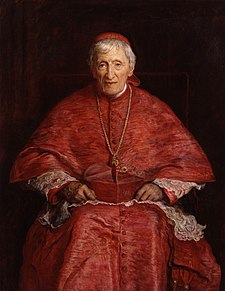
While on retreat last week this reflection from St. John Henry Newman's "Meditations and Devotions" struck me as being particularly powerful:

                         To possess thee, O Lover of my soul, is happiness,
                         and the only happiness of the immortal soul!
                         To enjoy the sight of thee is the only happiness of eternity.
                         At present I might amuse myself with the vanities of sense and time,
                         but they will not last for ever.
                         We shall be stripped of them when we pass out of this world.
                         All shadows will one day be gone.
                         And what shall I do then?
                         There will be nothing left to me but Almighty God.
                         If I cannot take pleasure in the thought of him,
                         there is no one else then to take pleasure in;
                         God and my soul will be the only two beings left in the whole world
                         so far as I am concerned.
                         He will be all in all, whether I wish it or no.
                         What a strait I shall then be in if I do not love him,
                          and there is nothing else to love!