Thursday, 14 March 2019

3rd Sunday of Lent

Today's gospel is a challenging one. Given that all must die we are still troubled by the premature deaths of innocent people, especially children. Some believers have even turned away from God because of their being scandalized by grief and pain at the death of a loved one. Jesus challenges us further when he says: "... but unless you repent, you will all perish as they (the Galileans slaughtered by Pilate) did." (Lk 13: 3) What did they need to repent from? What does it mean to "perish as they did"? Does it mean that the Galileans need to turn to God or else they would all die violently, as many did when the Jewish War broke out in AD 66? What is the Lenten message can we glean from this in 2019? 

We do need to recognize that we are a pilgrim people and that suffering, which is sometimes cruel and meaningless or absurd, can happen. Yet, just as we look forward during Lent to Easter so too we long for our heavenly homeland: "I consider that the sufferings of this present time are not worth comparing with the glory about to be revealed to us. For the creation waits with eager longing for the revealing of the children of God; for the creation was subjected to futility, not of its own will but by the will of the one who subjected it, in hope that the creation itself will be set free from its bondage to decay and will obtain the freedom of the glory of the children of God." (Rm 8: 18-21) The real tragedy, I suggest, therefore, is not so much suffering rather it is the death of hope. Unless we repent and recognize grace for what it is we too will find ourselves frustrated, bewildered and embittered by suffering and death, regardless of when it happens or what its cause is. We will die not rejoicing in what we have received at God's hands but full of regrets and recriminations. It is through our Lenten penances that we can rediscover the gift of hope and entrust ourselves to God regardless of our circumstances.

Image result for fall of the tower of siloam

Friday, 8 March 2019

2nd Sunday of Lent

The readings today all speak of looking to the future and relying on God's promise. Abram is given the promise of a land which will belong to his innumerable descendants even though, at this time, he does not as yet have a son (Gen 15: 5). In the Gospel Jesus, on the Mount of Transfiguration, speaks with Moses and Elijah: "of his departure (Geek. exodos) which he was about to accomplish at Jerusalem" (Lk 9: 31) This exodus means that he will have to pass through the agony of the Passion and Crucifixion in order to arrive at the Promised Land of the Resurrection. It is to heavenly realities that the Early Christians turned so that they could withstand the persecutions and trials they faced: "But our citizenship is in heaven, and it is from there that we are expecting a Saviour, the Lord Jesus Christ." (Phil 3: 20). Our Lenten penances, prayer and acts of charity, likewise, orient us not just to the celebration of Easter but also to our ultimate destination as Christians. We consciously act against the temptation to indulge our appetites through instant gratification and look to remedy our selfishness so that we may be fit for a Kingdom that endures: "For here we have no lasting city, but we are looking for the city that is to come. Through him (Jesus), then, let us continually offer a sacrifice of praise to God, that is, the fruit of lips that confess his name. Do not neglect to do good and to share what you have, for such sacrifices are pleasing to God." (Heb 13: 15-16)

Image result for transfiguration

Monday, 4 March 2019

1st Sunday of Lent

The devil, in the Gospel today, quotes Psalm 95: 11-12 (Lk 4: 10-11). Elsewhere St Paul tells the Corinthians: "Even Satan disguises himself as an angel of light." (2 Cor. 11: 14) Part of our Lenten journey involves practices that aim to purify us of pride, selfishness and self-indulgence. Then we will will be better able to discern the spirits: "Beloved, do not believe every spirit, but test the spirits to see whether they are from God; for many false prophets have gone out into the world." (1 Jn 4: 1) Our own ability to rationalize our sins or to make excuses for them can also bring about a double standard. Others, seeing my hypocrisy, may think to themselves: "He appears as a Catholic and quotes Scripture but through his actions he scandalizes and leads others astray." Thus, it is imperative that our actions coincide, as much as possible, with the faith we profess. St John states: "The children of God and the children of the devil are revealed in this way: all who do not do what is right are not from God, nor are those who do not love their brothers and sisters. " (1 Jn 3: 10) In the final analysis, our Lenten exercises will mean nothing if they do not help us to love our brothers and sisters better.

Image result for lent

Ash Wednesday

St Paul tells us: "See, now is he acceptable time; see, now is the day of salvation!" (2 Cor. 6: 2) The symbolism of Ash Wednesday is a spiritual "wake-up call." It helps us the strive with a greater effort to live according to the Gospel that has been preached and handed on to us.The danger is that we can go into auto-pilot by continuing our same old devotional practices and gradually we run out of zeal for the mission entrusted to us. If we are to be "ambassadors for Christ" (2 Cor. 5: 20) to a world grown tired and cynical on account of its sins we need to embody the Gospel more authentically so that others too will wake from their spiritual slumber and prepare for Easter joy.

Related image

Monday, 25 February 2019

8th Sunday in Ordinary Time

Beyond doubt the Resurrection is an amazing transformation. As St Paul's states today: "When this perishable body puts on imperishability, and this mortal body puts on immortality..." (1 Cor. 15: 54) death no longer has a hold on the person and not only that, because we await our own resurrection in hope, we are not dominated by the fear of death here and now. This allows us to live unselfish lives and to bear fruit for the Kingdom: "Therefore, my beloved, be steadfast, immovable, always excelling in the work of the Lord, because you know that in the Lord your labour is not in vain." (1 Cor. 15: 58) Yet, our full appropriation of the promise given us in baptism remains a challenge. When we act as blind guides, self-important disciples and struggling to see past the log in our own eyes to take out the speck from another's eye we reveal the corruption within rather than the in-breaking of the risen power and life of our Lord Jesus Christ. With Ash Wednesday this week there is an opportunity to recommit ourselves to lives that give true and authentic witness to the hope that is within us: "Always be ready to make your defense to anyone who demands from you an accounting for the hope that is in you; yet do it with gentleness and reverence. keep your conscience clear, so that , when you are maligned, those who abuse you or your good conduct in Christ may be put to shame." (1 Pet. 3: 15-16)

Image result for resurrection

Thursday, 21 February 2019

8th Sunday in Ordinary Time

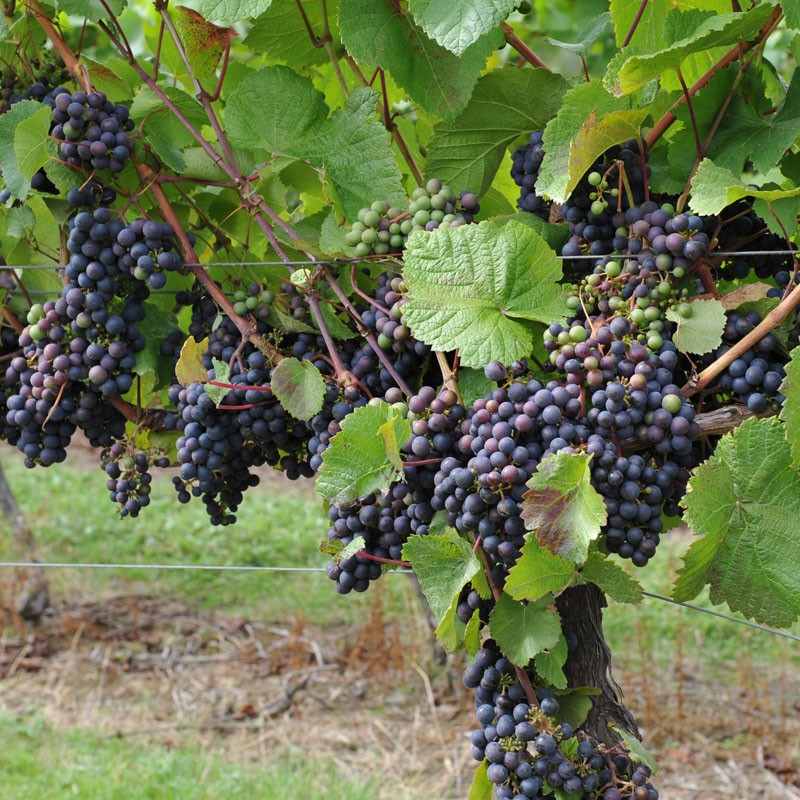
Today's Gospel has more hard sayings which confront us as disciples of the Lord. It is challenging to ask myself the questions: am I a blind guide?; am I a disciple who thinks I am above the teacher?; do I see the speck in my neighbour's eye ahead of the speck in my own?; do I bear bad fruit?; do I have a hoard of evil treasure in my heart from which my mouth speaks? Every time we come across a hard teaching in the Gospel we need to apply it first of all to ourselves. In this way the Lord can school us in the way of holiness just as he did with the first disciples. Like the rose bush or the grapevine we need to be pruned on a regular basis so that we can bear fruit for the Kingdom and also know the fullness of joy: "I am the true vine, and my Father is the vinegrower. he removes very branch in me that bears no fruit. Every branch that bears fruit he prunes to make it bear more fruit. You have already been cleansed (pruned) by the word that I have spoken to you. Just as the branch cannot bear fruit by itself unless it abides in the vine, neither can you unless you abide in me... My father is glorified by this, that you bear much fruit and become my disciples. As the Father has love me, so I have loved you; abide in my love. If you keep my commandments, you will abide in my love, just as I have kept my father's commandments and abide in his love. I have said these things to you so that my joy may be in you, and that your joy may be complete." (Jn 14: 1-4, 8-11) 

Image result for grape vine

Wednesday, 13 February 2019

7th Sunday in Ordinary Time

Often at funerals we hear how the deceased is already in heaven and how wonderful s/he was during their life. Sometimes I say to myself: "maybe we should ask the opinion of his ex-wives!" The standard given to us for holiness in  today, nevertheless, sets the bar very high indeed! The challenge is: "If you love those who love you, what credit is that to you? For even sinners love those who love them." (Lk 6: 32) Can I identify in my own life where I have loved those who do not love me? Can I tell a story of how I turned the other cheek to an insult? When did I last genuinely bless those who curse and abuse me even if only in my prayer? With the Sermon on the Plain in Luke and that on the Mount in Matthew we are obliged to see where our faith is in practice. If we do not see evidence for this the best time to start is now: "See, now is the acceptable time; see, now is the day of salvation! We are putting no obstacle in anyone's, way, so that no fault can be found with our ministry, but as servants of God we have commended ourselves in every way: through great endurance in afflictions, hardships, calamities, beatings imprisonments, riots, labours, sleepless nights, hunger; by purity, knowledge, patience, kindness, holiness of spirit, genuine love, truthful speech and the power of God; with the weapons of righteousness for the right hand and for the left; in honour and dishonour, in ill repute and good repute. We are treated as imposters, and yet we are true; as unknown, and yet we are well known; and dying, and see - we are alive; as punished, and not yet killed; as sorrowful, yet, always rejoicing; as poor, yet making many rich; as having nothing, and yet possessing everything." (2 Cor. 6: 2-10)

Image result for turn the other cheek