The gospel states: "Many of the Jews therefore, who had come with Mary and had seen what Jesus did, believed in him." (Jn 11: 45) It is interesting to see what counts for people when they come to believe in Jesus Christ. The Samaritans heard from the woman at the well: "Come and see a man who told me everything I have ever done" (Jn 4: 29) and believed once they saw Jesus for themselves. With the man born blind the Pharisees are so scandalized that Jesus worked a healing o the sabbath that they say: "Give glory to God! We know that this man is a sinner." (Jn 9: 24) Today it is the bringing back of Lazarus from the dead. The question that can occur for us is: "what counts for me?" Often it will come down to the life and example of someone who has been a witness to the power of God. This makes it incumbent on me, as someone called in baptism to be a missionary disciple, to set such an example and to be a witness to how God's power has been at work in my life. In that way our joy can be complete since we will rejoice at seeing that power at work in the lives of others.
Monday, 23 March 2020

Sunday, 15 March 2020
4th Sunday of Lent
The focus for today's Gospel is predominately on the man born blind. Interestingly, we have not only his interaction with Jesus but also with the Jewish authorities. As a Jew he does not have the benefit of the New Testament, the example of our parents or other sources that we have when we come to rely on in faith. Rather, he can only go on what he has experienced in his encounter with Jesus. he reasons thus: "Here is an astonishing thing! You do not know where he comes from, and yet he opened my eyes. We know that God does not listen to sinners, but he does listen to one who worships him and obeys his will. Never since the world began has it been heard that anyone opened the eyes of a person born blind. If this man were not from God, he could do nothing." (Jn 9: 30-32) This highlights that for everyone who wishes to become, or to remain, as a Christian and grow in discipleship that the encounter with Jesus is foundational. Our faith is not a "head trip," a fantasy or a self-help guide of collective wisdom. It is about a first hand experience of the person of Jesus Christ, his revelation of the Father and gift of the Holy Spirit. St Paul wrote to the Corinthians: "My speech and my proclamation were not with plausible words of wisdom, but with a demonstration of the Spirit and of power, so that your faith might rest not on human wisdom but on the power of God." (1 Cor 2: 4-5)

Monday, 9 March 2020
3rd Sunday of Lent
Today we hear of the Samaritan "woman at the well" that: "Then the woman left her water jar and went back to the city." (Jn 4: 28) In the context of the whole passage it is clear that "water", "well" and other elements in the conversation are not to be taken at literal/face value. What does the "water jar" and "well" mean for the woman? She has been returning to the well time and time again and yet she is still thirsty. After encountering Jesus she is freed from this need and as a result no longer needs the water jar. For all of us there remains what is the "well" and the "water jar" for us? Is it alcohol, personal repute, buying shoes, sex, etc such that we continuous return to a behaviour and are never satisfied? Lent is an opportunity to encounter Jesus anew so that we can be empowered to leave behind bad habits and even addictions. If people see the power of God at work in us then they will be open to experience for themselves. Then they can say to us in turn: "It is no longer because of what you said that we believe, for we have heard for ourselves, and we know that this is truly the Saviour of the world." (Jn 4: 42) I recommend to parishioners that, for a fuller reflection, they go to that given by Bishop Robert Barron of Youtube speaking on The Woman at the Well during the Year of Mercy.

Sunday, 1 March 2020
2nd Sunday of Lent
In the First Reading for today we hear: "Abram was seventy five years old when he departed from Haran" (Gen 12: 4) and, in the Gospel: "When the disciples heard this, they fell to the ground and were overcome with fear." (Mtt 17: 6) The encounter with God and my response to his call will always take me outside of my comfort zone. This also goes for the Church as a whole. When we consider the challenge of Pope Francis to all Catholics to become "missionary disciples" it unsettles many. They are happy to live in the parish of school community as they have know it over the years and the idea of venturing out beyond the walls of the institution is frightening. Yet, that is what we are called to do. The Church of today needs to commit afresh to the spread of the Gospel and not be afraid of past failures or disappointments. Like St Peter we can hear the words: "Put out into the deep water and let down your nets for a catch" and reply: "Master, we have worked all night long but have caught nothing." (Lk 5: 4-5) Nevertheless, let our response also be: "Yet if you say so, I will let down the nets." (Lk 5: 5) I exhort all parishioners, as well as myself, to be open to the teaching of the Church on evangelization and discipleship so that we may share in the joy of the saints as we have shared with them in their mission: "Do not be afraid; from now on you will be catching people." (Lk 5: 10)

Tuesday, 25 February 2020
1st Sunday of Lent
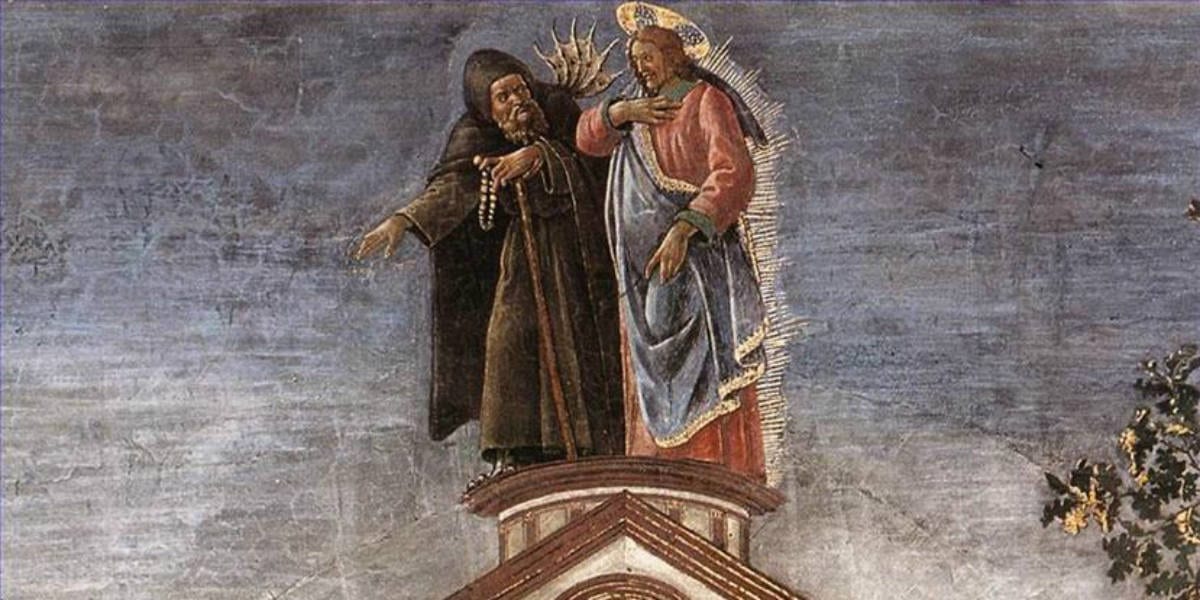
In today's Gospel I was intrigued by the statement at its outset: "Jesus was led up by the Spirit into the wilderness to be tempted by the devil." (Mtt 4: 1) There is a number of issues here. First, Jesus was "led up by the Spirit." This is the same Spirit that was shown, in the previously verses, as descending upon Jesus like a dove. Thus, Baptism is not shown to be static but future oriented. The presence of the Spirit also speaks of prayer. Jesus was not self directing, as we see frequently in the Gospel of Luke, but always turned to prayer before making important decisions. This give us an example to always turn to the Holy Spirit in our own vocations and discernment of what to do with our lives. Second, Jesus is led up by the Spirit "into the wilderness." The Holy Spirit, when we open our hearts to him, frequently does not allow us to stay in our comfort zone. A prelude to growth and/or mission is a time of testing, doubt and even suffering. Jesus is not spared this. Third, the purpose of this going into the wilderness is one of spiritual warfare. This combat will reach its climax in the Garden of Olives during the Passion. Again, this shows Jesus being like us although being without sin. It might be seen as scandalous that Jesus could be genuinely tempted, since this speaks of the possibility that he could give in to it. However, the write of the Letter to the Hebrews reasons thus: "It was fitting that God, for whom and through who, all things exist, in bringing many children to glory, should make the pioneer of their salvation perfect through sufferings. For the one who sanctifies an those who are sanctified all have one Father." (Heb 2: 10-11) In this way, the temptations in the desert reveal how perfectly human Jesus is, in his divinity, so that salvation might be ours through his suffering.
Monday, 17 February 2020
7th Sunday in Ordinary Time
Last Sunday we had some difficult teachings which challenged both us and the Early Christians to have a righteousness which exceeds that of the scribes and Pharisees (cf Mtt 5: 20). Both of these groups were proverbial for observing the letter of the law. Today we are challenged again: "For if you love those who love you, what reward do you have? Do not even the tax collectors do the same?" (Mtt 5: 46) This new and greater standard of love is required of us individually and as Church. We are all called to go outside of our "comfort zone" when it comes to interacting with others even when they are indifferent or even hostile to us. How can we do this? The answer lies in our knowledge that God has loved us first and we have received so much from Him: "You received without payment; give without payment" (Mtt 10: 8) and "Beloved, since God loved us so much, we also ought to love one another. No one has ever seen God; if we love one another, God lives in us, and his love is perfected in us." (1 Jn 4: 12)
Saturday, 8 February 2020
6th Sunday in Ordinary Time
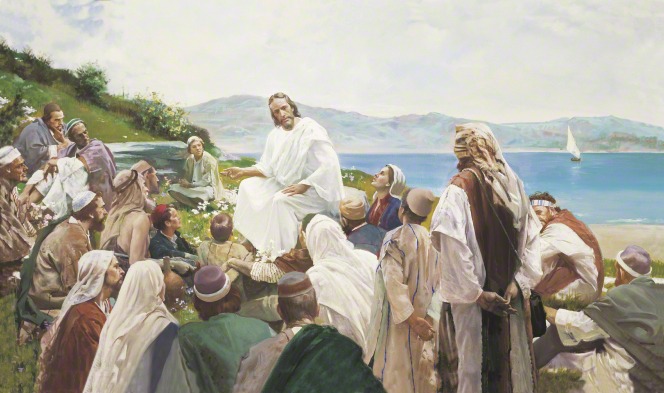
Today for our Gospel we have a long passage from the "Sermon on the Mount." This is the new law of the new Moses. Some of the Pharisees and Sadducees thought that Jesus was soft or lax when it comes to law. This is because he embodied the love and mercy of God and, furthermore, saw law as being there to serve human beings rather than to be in tyranny over them. In other words he did not use the law as a mechanistic way to sanctity. Rather, he looks to a conversion of heart that ultimately mirrors the love of the heavenly Father. Let us all be alert to our own attitude towards law. We need to understand, in the depths of our being, the joy and love of Christ that transforms our understanding and living out of the law.

Subscribe to:
Posts (Atom)